




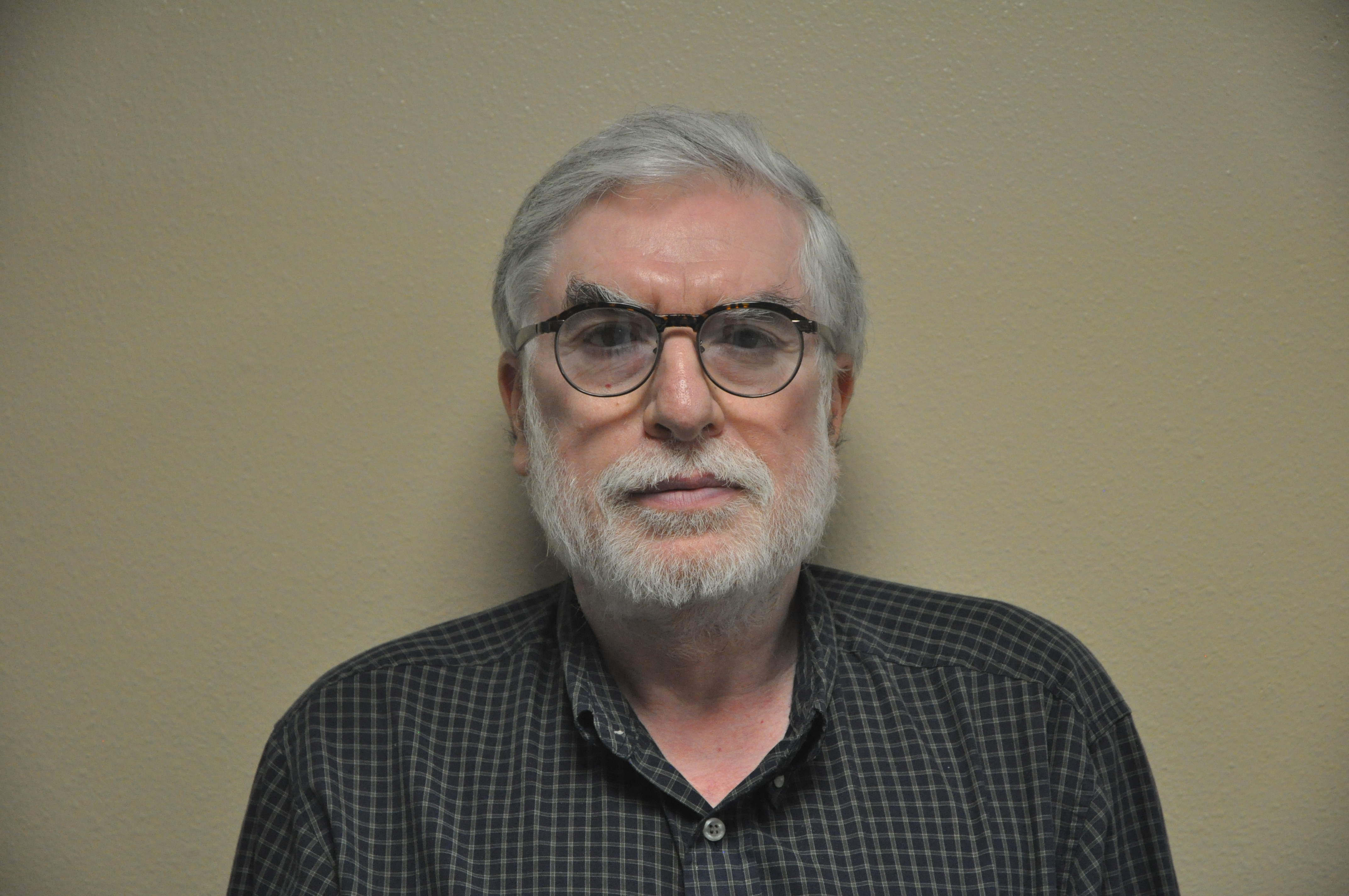
 SINGH Foundation was started in 1993. Prof. Deepak Kapur was the first President of the foundation, serving for a number of years. He maintained a close association with the foundation even after he stepped down. Sadly, he passed away on April 11, 2026, of complications from ideopathic pulmonary fibrosis. [If you wish to donate in Deepak's memory, our homepage describes how you can do it.]
Below are memories of Deepak from some of his friends. There are two files with pictures of Deepak, one from his wife Prof. Roli Varma, and the other from an old friend Ejaz Warsi. Also, there was a memorial meeting organized by his department at the University of New Mexico on Wednesday April 22. A video of the hour-long program is available.
Independently, a former student of Deepak's, ThanVu Nguyen, has set up a googlegroup:https://groups.google.com/g/deepak-kapur-memorial The posts to the group are open-access and have much information about Deepak's scholarly life. And a UNM webpage lists his many scholarly accomplishments.
Biju: I did not know Deepak very well, even though he was part of our circles, till 5 years ago when he joined India Civil Watch International (ICWI). He became a person I would reach out to, to understand technicalities. After that, my conversations with him continued. Just recently, I heard from an ICWI member who has built a very significant mentoring network called the Bahujans scholar network, that he was overjoyed at the news of Deepak joining as a mentor and helping a whole group of Bahujan CS students in India figure out career pathways. Deepak, I knew, was actively thinking about caste when the initial ICWI work groups were being formed, he was the first one to volunteer for the anti-caste work group. And when he moved to New York, I was overjoyed, hoping to get to know him a lot better. But kya kare... that hope will never be realized.. We will miss you comrade.
Raza: : When I eventually met Deepak, I felt a sense of delightful closure. In a sense, I had known him for over two decades. Memories of the IPANA years, recounted by a variety of people (Sekhar, Vinod, Hari Sharma and others) had energized me a lot, and the dramatis personae were known to me. I met his family members first. Roli was very warm and gave us practical tips on house decor. Ila was at one of the Thanksgiving gatherings at Sue and Sekhar's place. I met Daya at Vinod's 70th birthday party. But Deepak proved elusive. I read many of his postings on various news bulletins and began to rely on his insight on political matters. I figured out that he was some kind of a computer-science-genius. But our interactions were mostly about politics.
When he and Roli were contemplating a move to New York, we had a few phone chats. I marveled at how I had never met him, despite our overlapping circles. The conversations were very warm; we could lapse into Hindi and talk about this and that.
Finally, we met at Sue and Sekhar's place, and it felt as if we had known each other for a long time. I knew he had a difficult illness to negotiate, but he seemed in great spirits. We talked about Ila's Palestine activism, of which he was very proud. He commiserated with me about my own immobilizing nerve condition. I hoped to have the pleasure of his company for the next few, and hopefully several, years. So, the abrupt news of his passing came as a big shock.
I am most impressed and inspired by the exemplary way Roli took care of him in recent years. That she was alone with him as he passed seems almost poetic.
In this age of rightward drift, especially in India, Deepak's passing leaves our community poorer. He was a steadfast advocate for social justice. In his memory, we can only aspire to do more, in whichever way possible.
I look forward to reading more from those who knew him better.
Ramya: We didn't know Deepak for long but when we last saw him, it was almost as if we'd been friends for a long time.
Vinod:Deepak and I had known each other for 50 years ever since we met in Cambridge, MA in early 1975 when Deepak was pursuing his PhD in computer science at MIT. We became good friends very quickly after since we shared many social and political views about democratic rights, secularism, opposition to communal politics based on religious identity, and peace and good relations between South Asian countries especially India and Pakistan. I don't remember now but it was perhaps Deepak who introduced me to some MIT students from Pakistan: Pervez Hoodbhoy, Arvind Khilnani, and Waqar Zakaria, are the names I remember now, (especially as Pervez and Arvind have remained good friends until now amd were very upset to hear about Deepak's untimely passing). All of us discovered our common perspectives and we soon formed the Group of Concerned South Asians (GOCSA) to promote friendship between students and academics from India and Pakistan in the Greater Boston area. A few months after GOCSA, the Indian Peoples' Association in North America (IPANA) was formed in June 1975 in Montreal. I can't remember precisely now but I probably introduced Deepak to IPANA after returning to Cambridge from attending the founding meeting of IPANA in Montreal in June 1975. If memory serves me right, Deepak, Sekhar and I formed the core group that mainly wrote and produced the monthly India Now tabloid-style newspaper as an IPANA publication for a few years. Deepak also helped in creating and serving on the board of the SINGH Foundation that took its name from our late friend R.P. Singh who passed away at an early age from cancer.
As we belonged to different academic domains, my interaction with Deepak was limited to social and political issues where we had common interests and concerns. However, Deepak was an internationally distinguished scientist in his field of computational mathematics.
Ravi:The first time I met Deepak was in the Spring of 1977. The last time Kanchan and I met him was in December 2024 in our apartment in Noida when he and Roli were on their annual winter visit to IIT, Delhi. We could not meet him this past December because we were away from Delhi. Now we cannot meet him. That hurts!
Deepak has a unique place in my life, and in Kanchan's too. I have had many mentors in the meandering course of my life, but Deepak was special. The starting of our friendship was not smooth though. Thankfully, this phase lasted only a few months. When I landed at MIT in Spring of 1977 I was immediately trapped by the Harvard and Cornell team of an Hoxha-ite group that was at odds with Deepak and IPANA. A highly opinionated and abrasive village lad that I was, I had my share of quarrels. But Deepak persisted. Finally by the end of 1977, I was convinced and he brought me into IPANA.
But he holds a far more special place in my and Kanchan's life. Back in 1976, in Gorakhpur, Kanchan and I had decided to get married, but I had to leave for MIT before that could happen. A good part of 1977 went into figuring out how she could come over to Cambridge. MIT was challenging enough for a poorly educated Gorakhpur graduate, but the real challenge was along this more private axis of life. Deepak kept me sane and helped in crucial ways while Kanchan kept looking for a position in the Boston area and I agonized over the finances. Finally she came over in Spring 1978, we got married, and Deepak expanded his mentoring role now to both of us. For more than two years, we lived next door to each other, we in Westgate and he in Tang Hall till he left for Albany in 1980.
Upon our return to India in 1984, we fell out of touch with Deepak and Roli for many years. This was primarily on account of the life I had chosen. Actually, we got disconnected with all friends and comrades in the US, especially in IPANA, who had played such important roles in the formative years of my political life as well as in our personal lives. In 1991, when I was spending a lot of time in Punjab, wandering the terrorism-infested villages and often attending funerals of leftist comrades killed by Khalistanis, somehow, I do not remember how, I came to know that Deepak was visiting his extended family in Amritsar. This was before the days of emails. Kanchan and Prachee came over from Lucknow and all three of us met Deepak, Roli and little (at that time) Ila as well as members of his extended family. This was six years after Operation Blue Star, but Deepak was still so disturbed and so passionate about it that he took us to the Golden Temple and gave us a guided tour of history describing how the army column had moved in, how the main gateway had been flattened by a tank, and where all those holed up in the compound had been killed. Indira Gandhi and Congress were real villains for Deepak, which resonated very well with me in 1991. Many years later we would have discussions from altered positions not only about Punjab, but also about India and the world. I met him once again in 1995/96 at TIFR. Those days, he used to come there every winter. Then, in 1999, Kanchan on her first visit to the US after 1984, met him and Roli at their house in Albuquerque. After that we did not meet him again for many years. In the last decade or so, we have met more often although never more than once a year.
He was once again beginning to assume a mentoring/advising role. Over the last few occasions that we met, he would chide me for not writing things up (actually writing a book). He thought I had interesting things to say about the Left, about India and about the World. The very last episode was especially touching. In December 2024, when he and Roli came over from IIT to our place in Noida, he reprimanded me again for not writing the book he thought I should write. When I protested that I do not know enough to write about such large and complex subjects, he tried to boost my confidence in the most charming way - like one encourages a child. He said, "Why do you forget that you have a PhD from MIT? You have all it takes to write."
Both Kanchan and I will miss him always. He has had an indelible imprint on our lives. I never measured up to his expectations, and he chided me in 2024 as he used to do in 1977. I will always cherish that.
Ashok: My life in the USA was transformed gradually towards the end of 1975, when I first met Deepak at Cambridge MA. Since then, over four years, I cannot count the number of days that I stayed in that apartment, some hundreds of feet high, overlooking the Charles river. 1975 to 1979 (and continuing till 1981, when I left for India), he was one of my best friends.
After I left for India, I could not spend much time with him. Telephones were non-existent in India then and calls were just too expensive for an Assistant Professor. By the time, telephones came and became affordable, I was on a different journey. Though there was one time I did spend considerable time with him. It was 1988 or so. This was my first trip from India back to the USA. I had gone to a conference in San Diego. When I lived in the US, life was easy. But in that trip in 1988, life was not. One USD had become some Rs.15 (it was under Rs 6.75 when I came back). With limited income, I went to USA with small amount of funds. By the third day at San Diego, I was ready to give up. USA is too expensive for my visit. I called Deepak. I was to fly out of San Francisco. He asked me to reach there and I did. He flew from Albany to San Francisco to pick me up. He rented a car, and drove me all over California. We stayed with his friends. He took care of all expenses. The five days that I spent with him were memorable. My feeling awful, about visiting USA was a thing of the past. Five days later, when he came to drop me at the airport, he made me promise that I would not hesitate to come back.
I did, many times. Once he drove to Boston, picked me up and even brought for me a parka, which made the cold go away. He introduced me to quality Thai Cuisine. He drove me all around.
What can I say? As I sit to write this, I can remember some hundreds of incidents where he mentored me, took care of me, and above all had been a friend. Today he is gone.
Roli is left alone. I hope she will come and spend time with me once she recovers.
For the time being, that is all.
Ejaz Warsi (photos): Deepak and I came to MIT at the same time, in Fall of 1973. We lived in the graduate dorm (Ashdown House) for the first two years. We were part of a close knit group of Indian-Pakistani students. Deepak and I were also part of the executive committee of the Indian student club Sangam. Our close association allowed me admire Deepak’s views on a variety of issues including on politics of India at the time. He felt great empathy with the victims of social injustices.
For over half a century we remained in regular contact and visited each other whenever possible. The last time we were together was in Albuquerque in 2018. Despite being an accomplished scientist and educator Deepak was a very humble person. He was fond of Indian music, particularly ghazals. For some time he also tried to learn Urdu so he could understand and enjoy ghazal. We often exchanged music on cassettes, CDs and lately sharing YouTube links.
I am still in shock. I am going to miss my conversation with Deepak. May God help Roli and Ila to overcome the untimely loss.
Univ. of New Mexico: Distinguished Professor Deepak Kapur of The University of New Mexico Department of Computer Science passed away unexpectedly on April 11. He is remembered by friends and colleagues for an illustrious career in teaching and a deep intellectual curiosity that motivated him until the end.
Kapur joined the department in December 1998 and served as chair from 1999 until 2006. He ushered into the department a spirit of strong research activity, through faculty recruitment and increasing graduate student opportunities. To support faculty research, he increased the number of teaching assistantships in the department, which provided essential support for classes and helped the School recruit graduate students.
Kapur’s research was at the intersection of automated reasoning, formal methods, algebraic reasoning and symbolic computation, with a long-standing focus on developing algorithmic techniques for reasoning about mathematical structures and software systems. His work made foundational contributions to term rewriting systems, equational reasoning, and decision procedures, and more recently extended into areas such as program verification, cyber-physical systems and security. A unifying theme in his research was the design of rigorous, mathematically grounded tools that can automatically establish correctness properties, enabling more reliable and trustworthy computing systems.
Shuang Luan, chair of the Department of Computer Science, joined UNM in 2004, benefiting from Kapur’s efforts to bolster research. “Deepak truly loved both research and teaching. He cared deeply about his students and was dedicated to supporting their growth, both academically and personally,” Luan said. “He will be missed dearly by everyone in the department.”
Catalin Roman, professor in the Department of Computer Science and former School of Engineering dean, described Kapur as a dear friend and “perfectionist” of both teaching and research who found intellectual inquiry and innovation central to his identity. “He showed care for the individual while demanding quality work; he accepted no shortcuts on his part and invested much effort to ensure an excellent learning experience, even when facing major health challenges,” Roman said. “On the research side, he felt a deep obligation toward his graduate students and their future careers. He was a great mentor and rejected retirement out of a desire to see his last student graduate.” Close offices helped the two develop a close friendship centered around similar values, retelling of their life stories and analysis of world affairs. “I loved our dinners together, especially those involving Roli’s (Kapur’s wife) wonderful cooking, and I appreciated his collection of great Scotches, which he generously offered for side-by-side tasting,” Roman said. “He enjoyed movies and often recommended hard-to-watch, traumatic stories about life in India.”
ThanhVu Nguyen, associate professor in the Computer Science Department at George Mason University, earned a Ph.D. under Kapur’s advisement in 2014 and remained close. Nguyen remembers Kapur as a respected senior researcher who “could be quite amusing and fun to be around.” As a student, Nguyen called Kapur “Professor.” Amused by this, Kapur began calling Nguyen “Professor,” too, until he graduated and became an actual professor, at which point, Kapur went back to calling Nguyen by his name. Kapur never stopped learning new things. When Nguyen’s research interests transitioned to neural network verification, Kapur, then 73, began learning about the work and offering new insights. Recently, Nguyen invited Kapur to serve as co-PI on an NSF proposal. The last message Kapur sent to Nguyen was about the research work they planned to do. “Deepak is the type of person that I simply do not believe could “’retire’” and would think about research until his last day,” Nguyen said. “I imagine in those last few days he was still thinking about how to make NNV proof checking more efficient.” Kapur earned his Ph.D. from Massachusetts Institute of Technology in 1980 following B.Tech and M.Tech degrees from the Indian Institute of Technology in 1971 and 1973, respectively.
He is survived by his wife Roli Varma, Carl Hatch Endowed Professor in the UNM School of Public Administration, and his daughter, Ila Kapur Varma, associate professor of mathematics at the University of Toronto.
IIT Delhi: Deepak was a leading researcher in the area of Automated Reasoning, particularly using symbolic computation and term rewriting techniques, and was a well respected figure in Formal Methods, known for his encyclopaedic knowledge of mathematics. His work on Groebner bases found applications in geometry theorem proving and computer vision. His software tool Rewrite Rule Laboratory (RRL) was the first theorem prover based on term rewriting and the Knuth-Bendix completion procedure, and was widely used in hardware verification, specification analysis and other applications.
He was a winner of the Herbrand Award in 2009 “in recognition of his seminal contributions to several areas of automated deduction including inductive theorem proving, geometry theorem proving, term rewriting, unification theory, integration and combination of decision procedures, lemma and loop invariant generation, as well as his work in computer algebra, which helped to bridge the gap between the two areas.”
Born in Amritar, Deepak studied Electrical Engineering at IIT Kanpur (B. Tech. 1966-71, M. Tech. 1971-73) before going on to complete his Ph.D. at MIT working with the legendary Barbara Liskov on his dissertation “Towards a Theory of Abstract Data Types” (1980). He then worked at General Electric Corporation’s R&D Laboratory at Schenectady, NY till 1987. He was also an adjunct professor at Rensselaer Polytechnic Institute in that period. In 1988 he moved to SUNY Albany as a professor. In 1998, he became the Chair of the Computer Science department at the University of New Mexico, serving till 2006; after stepping down, he became Distinguished Professor in that department.
Prof. Kapur was Editor-in-Chief of the Journal of Automated Reasoning from 1993-2007, and served on the editorial boards of several other journals in symbolic computing, logic and algebraic methods. He also was a member of the board of Leibniz International Proceedings in Informatics, and at the United Nations University in Macao, CSRI of the Sandia National Laboratories and Los Alamos Computer Science Institute.
Reflecting on his association with the department, Prof. Sanjiva Prasad recalled: “Deepak was a regular visitor to the CSE Department, almost annually in the December-January period. He was ever enthusiastic about sharing his knowledge and insights. On almost every visit he would give a series of seminar talks, often running into hours or until his lungs got tired. A small question could lead to a comprehensive lecture on whatever mathematical domain it concerned, conveying insights both theoretical and computational. He was always accessible, and always ready to chat. Sachin Maheshwari, SAK and I spent a lot of time with him, and in recent years so have Nikhil, Vaishnavi, SVS, Priyanka, Madhukar and Sorav, as well as some of our grad students.
Deepak also had a fierce social commitment to progressive causes, and was unafraid to voice his opposition to autocratic politics across the world. I got to know him around 1986-87 when he was on my friend CK Mohan’s dissertation committee, and our initial conversations were more around politics than computer science. Or IIT Kanpur. Deepak was a friend — from their graduate days together at MIT — of Mandayam Srivas (Kumar Madhukar’s adviser, and at that time the professor for whom I was a TA and who was later my colleague at ORA). He had an easy, friendly attitude with everyone, and in all his years in the US, retained his “thhet” Punjabi accent.”
Sue: Deepak and Roli have been a part of our life since Sekhar and I first met and went north to an IPANA gathering. Our family lives have intersected from when we brought our baby son to sit on Deepak's bed in Tang Hall,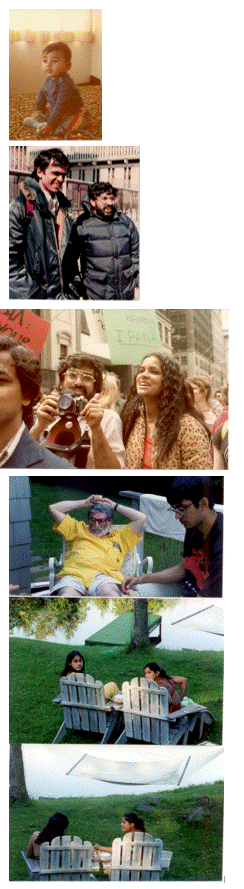 to visits when they moved to Albany. We admired Roli's transformation of their home into a work of practical beauty, even while everyone talked politics nonstop. Later, Ila arrived and IPANA discussions continued.
They came to NY for rallies, and joined us on family vacations. When our mutual IPANA friend RP Singh suffered a relapse of cancer, the Kapur-Varma family offered support for him during several traumatic months.
When RP died, Deepak, Sekhar and a few others started SINGH Foundation. It was named for RP, whose funds created its base, and given an acronymic meaning: Secular India's National Growth and Harmony. As its president, Deepak helped it grow and set it on a sound footing.
Deepak and family moved to Albuquerque, but remained closely involved with SINGH Foundation and with projects in India. Sekhar and he spoke often by phone. But we saw him and his family only on their visits to New York, or when we stayed with them once for a brief vacation, and a lot of heated political talk in their home on the mountain.
Deepak's lungs weakened and his doctor insisted he move to sea level. We lobbied hard for him and Roli to come to New York. So he tried it out for a semester, researching on invitation at NYU. While Roli was in Montreal caring for her mother, Deepak lived alone in an NYU-owned studio and showed the same excitement and interest he did about everything - exploring food carts, restaurants, free jazz performances, and demonstrations. We saw him every couple of weeks and talked more often. He read deeply and widely and had a thoughtful opinion about all the issues of the day. It was a joy having him drop over for dinner. (With all his eating out, he looked forward to home-cooked anything; sadly our household was not a good source.)
Then Roli and he decided to buy an apartment here, and got advice from Vinod and Fely and from our grown kids. We celebrated with a meal at their new home as they considered what to bring from Albuquerque. The trip back to New Mexico to deal with their move and doctors unfortunately proved to be Deepak's last.
Sekhar and I are very sad to lose Deepak, and the resumed closeness we had found with him.